

 FP2280 : Congenital Primary Aphakia: Useful Lessons to learn
Dr. SUSHMITA KAUSHIK
Dr.SAGARIKA SNEHI, Dr.GAURAV GUPTA, Dr.PANDAV SURINDER SINGH
Abstract
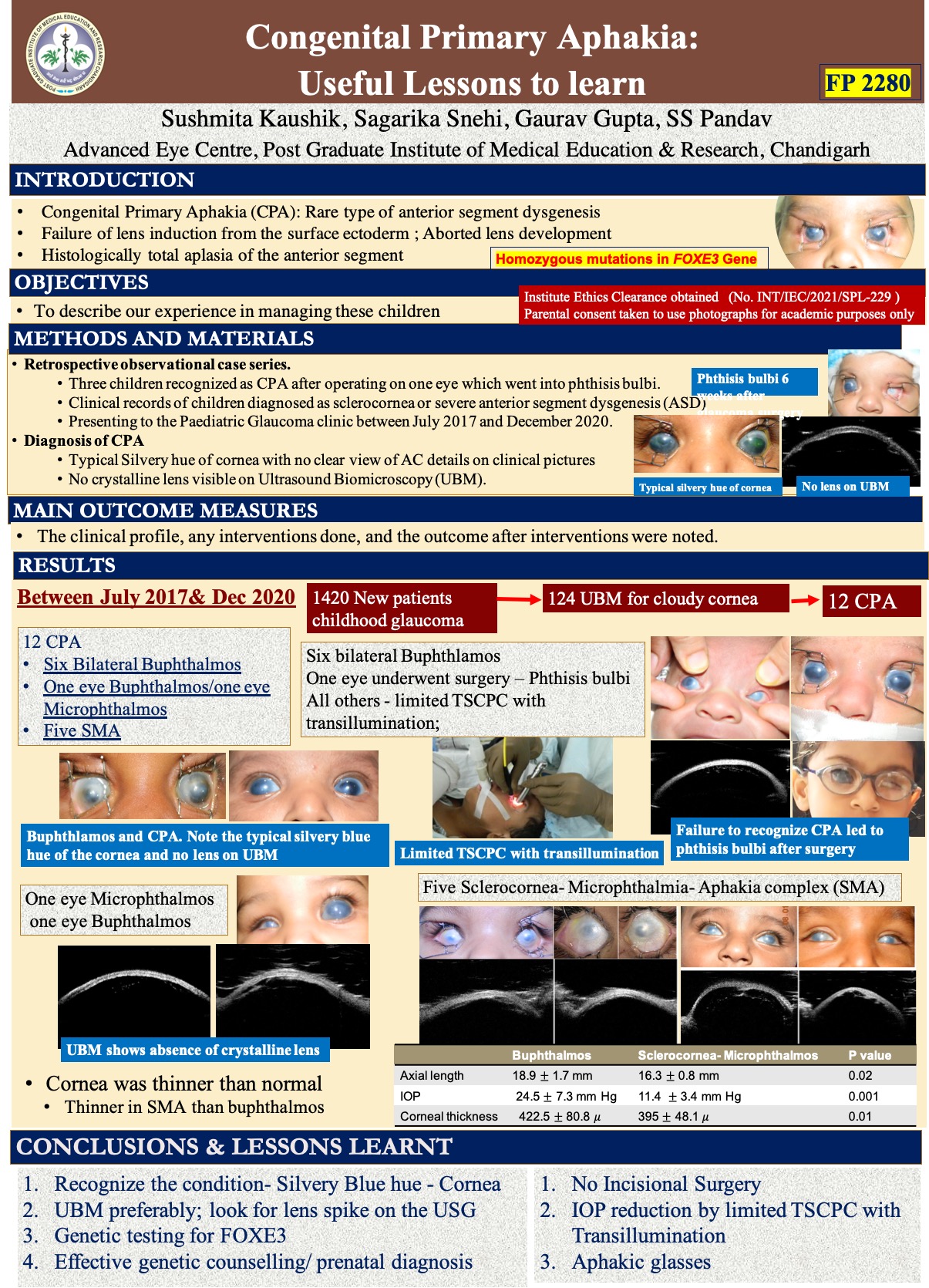
Background: Congenital Primary Aphakia (CPA) is a rare condition resulting from aborted lens development and maldevelopment of anterior segment. They present with developmental glaucoma and hazy cornea. Any type of incisional surgery has been reported to result in phthisis bulbi.
Aims : We describe our experience in managing these children
Method and results: Nine children (mean age 3.5 months) presented with wandering eye movements. They had large hazy cornea with a silvery-blue hue; no appreciable limbus or anterior segment structures, raised intraocular pressure (IOP) and optic disc cupping. The clinical diagnosis (CPA) was confirmed by ultrasound Biomicroscopy. The first baby underwent trabeculotomy with trabeculectomy and progressed to phthisis bulbi. All subsequent patients were managed conservatively, and had good ambulatory vision with aphakic glasses.
Conclusion: Early recognition, Aphakic glasses, and IOP control are essential in the preserving the functional vision in CPA.
Leave a Comment